WEBINAR RECORDING · 2025-04
China's New Trade Policy
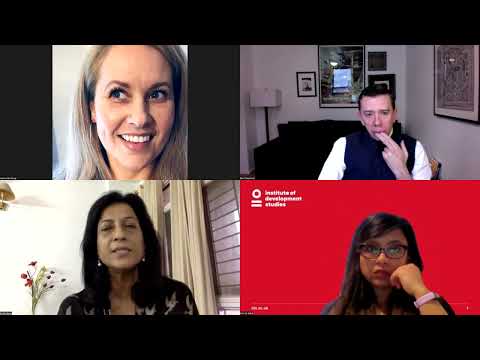
In this conversation: Henry Gao and Huan Zhu; moderators Ben Shepherd and Hanna Norberg.
Henry Gao and Huan Zhu examine the April 2025 tariff confrontation as a negotiation over economic rules and political priorities. Their discussion contrasts an ambitious interpretation of US strategy with uncertainty about credible concessions, while identifying Chinese domestic reform as a possible route toward a less confrontational outcome.
Session information draws on the recording and its original description. Affiliations and policy context refer to the time of the webinar.
FROM THE CONVERSATION
Three takeaways.
What they mean in practice.
Prepared from the session recording using automatic transcription and editorial review. Follow the timestamp links for the original wording and context.
Tariffs may be bargaining tools, but the destination is contested
Watch 05:06 ↗Gao interprets the US tariff escalation as leverage for agreements covering tariffs, regulation, and Chinese participation in supply chains. Zhu emphasizes unclear US priorities and the difficulty of negotiating a credible settlement when other tariff, investment, and security instruments can continue restricting commerce. These are judgments, not established findings about policymakers’ intentions.
Policy interpretation: Specify the desired change and concessions available before treating escalation as an effective negotiating strategy.
Third countries face pressures beyond bilateral tariffs
Watch 42:04 ↗Gao envisages stricter origin rules and coordination among US partners. Zhu describes China combining market-opening initiatives and diplomatic outreach with potential countermeasures against agreements it sees as harmful. Her account of Asian partners stresses their wish to avoid choosing between Chinese economic links and US security relationships.
Policy interpretation: Assess agreements across the supply chain and against both major-power relationships; bilateral concessions may carry wider costs.
Domestic reform offers a potential opening
Watch 38:39 ↗Zhu identifies services liberalization pilots and alignment with higher-standard rules as developments worth watching, while stressing implementation and accession obstacles. Gao argues that household income distribution and social protection must change for consumption-led rebalancing. Both present reform as a possible outcome, not something tariffs reliably deliver.
Policy interpretation: Judge opening announcements by implementation, and distinguish trade-ministry measures from distributional decisions requiring higher political authority.
From the discussion
At 53:35, Zhu’s advice to US policymakers is to clarify their priorities. Gao’s response at 55:17 relocates the Chinese counterpart of that decision from the trade ministry to political leadership. Shepherd flags competing economic views on rebalancing at 58:13. Their closing exchange adds his hope that disruption renews appreciation for multilateral institutions alongside the speakers’ hopes for reform.